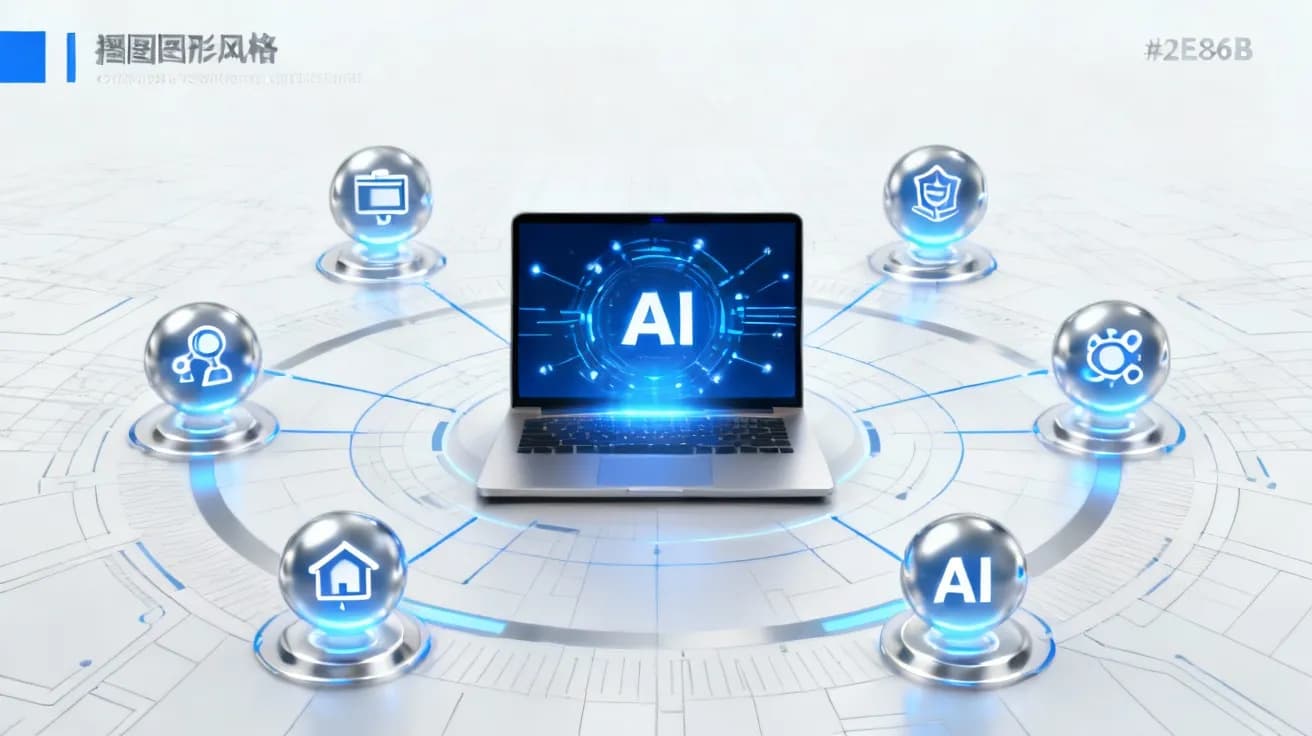

TL;DR: AI is fundamentally transforming laptops from mere computing devices into intelligent partners through dedicated neural processing units, enhanced battery life, smart performance optimization, predictive capabilities, and real-time collaboration tools that adapt to user behavior.
Reading Time: 10 minutes | Published: October 12, 2025 | Author: AI Insights Team
Table of Contents
- Why Should You Care About AI in Laptops?
- What Are Neural Processing Units (NPUs) and How Do They Change Everything?
- How Is AI Transforming Battery Life and Power Management?
- What Role Does AI Play in Performance Optimization?
- How Are AI-Powered Features Changing User Experience?
- What Does the Future Hold for AI-Integrated Laptops?
- Frequently Asked Questions
- Conclusion and Next Steps
- References
Why Should You Care About AI in Laptops?
The integration of artificial intelligence into laptop computing represents one of the most significant technological shifts since the introduction of the laptop itself. This isn't just about adding new features—it's about fundamentally reimagining how computers interact with us, anticipate our needs, and enhance our productivity.
This article will help you:
- ✅ Understand the core AI technologies transforming laptops
- ✅ Identify how AI features will impact your daily computing
- ✅ Make informed decisions about your next laptop purchase
- ✅ Prepare for the AI-driven computing revolution

What Are Neural Processing Units (NPUs) and How Do They Change Everything?
What Makes NPUs Different from Traditional Processors?
Neural Processing Units represent a revolutionary advancement in computing architecture, specifically designed to handle artificial intelligence workloads with unprecedented efficiency. Unlike traditional CPUs and GPUs that were designed for general-purpose computing and graphics rendering, NPUs are specialized hardware engineered specifically for neural network operations.
Key Distinctions:
- Dedicated Architecture: Purpose-built for matrix multiplication and neural network calculations
- Energy Efficiency: Up to 10x more power-efficient than GPUs for AI tasks
- Parallel Processing: Capable of handling multiple AI operations simultaneously
- Real-Time Processing: Enables instant AI-powered features without cloud dependency
Performance Impact:
- 40+ TOPS: Modern NPUs can process trillions of operations per second
- Low Latency: AI features respond in milliseconds rather than seconds
- Offline Processing: Advanced AI capabilities work without internet connection
- Thermal Efficiency: Reduced heat generation compared to GPU-heavy workloads
How Do NPUs Transform Everyday Computing?
The integration of NPUs into mainstream laptops from Intel (Core Ultra), AMD (Ryzen AI), Apple (M4 series), and Qualcomm (Snapdragon X Elite) has fundamentally changed what's possible in portable computing:
Real-Time AI Features:
- Background Blur: Instant video conferencing background enhancement
- Noise Cancellation: Real-time audio filtering and voice isolation
- Face Recognition: Instant and secure login without network dependency
- Object Detection: Real-time identification of items in camera feeds
- Language Processing: Instant translation and transcription offline

How Is AI Transforming Battery Life and Power Management?
Why Is AI-Optimized Battery Life a Game-Changer?
Battery life has long been the Achilles' heel of mobile computing. AI integration introduces both challenges and opportunities for power management, leading to innovative solutions that dramatically extend battery life through intelligent energy allocation.
AI-Powered Battery Optimization:
- Adaptive Power Management: AI learns usage patterns and optimizes power distribution
- Predictive Resource Allocation: Anticipates user needs and pre-allocates resources efficiently
- Dynamic Performance Scaling: Automatically adjusts CPU/GPU performance based on task requirements
- Background Process Optimization: Intelligently manages background applications to minimize power drain
Real-World Battery Improvements
The impact on user experience is substantial:
- 15-20+ Hours: Many AI-equipped laptops now offer all-day battery life
- 30% Less Power: AI-optimized systems consume significantly less power for equivalent tasks
- Intelligent Charging: Smart charging patterns that adapt to usage schedules
- Thermal Management: AI-driven cooling that prevents overheating without sacrificing performance
Example Scenarios:
- Video Conferencing: AI optimizes camera and microphone usage for maximum efficiency
- Content Creation: Intelligent resource allocation during photo/video editing
- Web Browsing: Predictive preloading and background tab management
- Gaming: Smart performance scaling that maintains quality while extending playtime

What Role Does AI Play in Performance Optimization?
How Does AI Make Laptops Faster?
AI integration transforms performance optimization from a one-size-fits-all approach to a personalized, adaptive system that learns and evolves with each user. This intelligent performance management ensures that computing resources are allocated exactly where and when they're needed most.
AI-Driven Performance Features:
- Intelligent Task Scheduling: Predicts which applications you'll use next and pre-loads resources
- Dynamic Resource Allocation: Automatically shifts processing power between CPU, GPU, and NPU
- Application-Specific Optimization: Learns how you use specific apps and optimizes their performance
- Predictive Caching: Stores frequently accessed data and applications in faster memory
Performance Enhancement Examples
Content Creation Acceleration:
- Photo Editing: AI-assisted object selection, background removal, and enhancement
- Video Processing: Real-time video stabilization, upscaling, and compression optimization
- 3D Modeling: Intelligent rendering optimization and mesh simplification
- Code Compilation: Predictive code analysis and compilation optimization
Gaming and Entertainment:
- Dynamic Resolution Scaling: AI-powered frame rate and resolution optimization
- Intelligent Asset Loading: Predictive texture and model loading for smoother gameplay
- Real-Time Ray Tracing: Smart ray tracing that balances quality and performance
- Anti-Cheating Integration: AI-enhanced cheat detection and prevention

How Are AI-Powered Features Changing User Experience?
What New Capabilities Do AI Laptops Offer?
The integration of AI into laptop computing introduces features that were previously science fiction, transforming how we interact with our devices and accomplish everyday tasks. These capabilities extend beyond simple performance improvements to fundamentally enhance user productivity and experience.
Revolutionary AI Features:
- Predictive Assistance: AI anticipates your next actions and prepares the system accordingly
- Context-Aware Computing: The laptop understands your current context and adjusts accordingly
- Natural Language Interaction: Voice commands and natural language queries work offline
- Emotional Intelligence: AI can detect user stress levels and suggest breaks or adjustments
- Collaborative Intelligence: AI enhances teamwork through real-time collaboration tools
Everyday Experience Enhancements
Productivity Improvements:
- Smart Meeting Summaries: AI automatically records, transcribes, and summarizes meetings
- Email Prioritization: Intelligent email sorting and response suggestions
- Calendar Optimization: AI suggests optimal meeting times and prepares agendas
- Document Intelligence: Automatic document analysis, summarization, and information extraction
Creative Enhancement:
- Generative Design: AI-assisted graphic design, layout suggestions, and color palette recommendations
- Music Composition: AI-powered music creation and editing tools
- Writing Assistance: Real-time grammar checking, style suggestions, and content improvement
- Data Visualization: Automatic chart generation and data story creation

What Does the Future Hold for AI-Integrated Laptops?
What Emerging AI Technologies Will Shape the Next Generation?
The current wave of AI integration in laptops is just the beginning. Emerging technologies and developments promise even more transformative changes in how we interact with portable computing devices. Understanding these trends helps prepare for the next evolution of laptop technology.
Near-Future Developments (2025-2026):
- Advanced NPUs: Next-generation neural processors with 100+ TOPS capability
- On-Device Large Language Models: Localized LLMs that work entirely offline
- Enhanced Computer Vision: Real-time object recognition and scene understanding
- Predictive Maintenance: AI that predicts hardware failures before they occur
Long-Term Vision (2027-2030):
- Quantum Computing Integration: Hybrid classical-quantum processors for specialized tasks
- Neural Interface Technologies: Direct brain-computer interaction capabilities
- Fully Autonomous Systems: Self-optimizing computers that require no user intervention
- Environmental Intelligence: AI that adapts to and optimizes for environmental conditions
Industry Impact and Adoption Trends
Business Transformation:
- Automated Workflows: AI-driven business process automation
- Enhanced Security: Biometric authentication and threat prediction
- Intelligent Collaboration: AI-enhanced remote work and team coordination
- Data-Driven Decision Making: Real-time business intelligence and predictive analytics
Consumer Adoption:
- Personalized Computing: Devices that adapt to individual user preferences
- Seamless Integration: Cross-device AI synchronization and continuity
- Accessibility Improvements: AI-powered assistive technologies for users with disabilities
- Privacy Protection: On-device AI processing ensures user data remains private

Frequently Asked Questions
❓ Question 1: Do I need an AI laptop if I don't use AI applications?
Answer: While AI laptops offer enhanced capabilities even for general use, traditional laptops remain perfectly adequate for basic computing tasks like web browsing, email, and document editing. However, AI laptops provide future-proofing and will become increasingly necessary as AI features become standard across applications.
❓ Question 2: Are AI laptops significantly more expensive than traditional laptops?
Answer: AI laptops typically command a premium of 10-30% over equivalent traditional laptops. However, as AI technology becomes mainstream, price differences are decreasing. Many manufacturers now offer AI features across their product lines, making AI capabilities more accessible.
❓ Question 3: Will AI laptops become obsolete quickly as technology advances?
Answer: AI laptops are designed with upgradable components and software-updateable AI capabilities. Many manufacturers emphasize that current AI laptops will receive software updates that enhance AI performance over time, providing a degree of future-proofing.
❓ Question 4: Do AI laptops require constant internet connectivity?
Answer: One of the key advantages of modern AI laptops is on-device AI processing, which means many AI features work completely offline. However, cloud-based AI services can still provide more advanced capabilities for complex tasks when internet connectivity is available.

❓ Question 5: How should B2B buyers approach AI laptop procurement at scale?
Answer: For fleet purchases above 100 units, prioritize four criteria: (1) NPU performance certified at 40+ TOPS for Copilot+ eligibility, (2) consistent SKU availability over 12+ months to maintain image consistency, (3) BIOS-level customization and zero-touch deployment readiness, (4) clear spare-parts and warranty terms for 3–5 year service life. Work with an OEM that can lock configurations and pricing tiers per project rather than chasing consumer-channel deals.
Conclusion and Next Steps
Key Takeaways
🎯 AI integration is fundamentally transforming laptop computing from static tools to intelligent partners
🎯 Neural Processing Units are the cornerstone of this transformation, enabling real-time AI processing
🎯 Battery life improvements are substantial with AI-optimized power management systems
🎯 Performance becomes personalized and adaptive rather than one-size-fits-all
🎯 User experience is enhanced through predictive assistance and intelligent automation
Immediate Action Steps
If You're Considering an AI Laptop:
- Assess Your Needs: Determine which AI features will benefit your workflow most
- Check Compatibility: Ensure your essential software supports AI acceleration
- Consider Future Needs: Think about how AI capabilities might expand in your field
- Compare Options: Evaluate different manufacturers' AI implementations and performance
If You're Keeping Your Current Laptop:
- Update Software: Ensure your operating system and applications support available AI features
- Explore AI Software: Investigate AI applications that can enhance your productivity
- Monitor Development: Stay informed about AI trends that might impact your field
- Plan Future Upgrades: Consider when an AI laptop might become necessary for your work
The AI Laptop Revolution Is Here
The integration of artificial intelligence into laptop computing represents not just an incremental improvement but a fundamental paradigm shift in how we interact with technology. As AI capabilities continue to evolve and become more sophisticated, laptops will transform from being mere tools to becoming intelligent partners that enhance our productivity, creativity, and problem-solving abilities.
Whether you're a creative professional, business user, or technology enthusiast, understanding and embracing AI-powered laptops will position you at the forefront of the next computing revolution. The future of portable computing is intelligent, adaptive, and deeply integrated with artificial intelligence.
Related Reading
Continue building your AI laptop B2B knowledge with these guides:
- How Will the Global AI Chip Race Reshape Enterprise Laptop Procurement? — Supply chain risk and AI chip geopolitics.
- Laptop Specifications Guide: CPU, RAM, Storage for Custom Orders — Spec-by-spec procurement reference.
- Business Laptop Customization: Corporate Solutions — Enterprise deployment patterns.
- OEM vs ODM Manufacturing: Complete Guide for Tech Brands — Choose the right manufacturing model.
Ready to roll out AI-ready laptops at scale? Request an OEM quote from AIERXUAN — Copilot+ NPU configurations, factory imaging, CE/FCC/RoHS certified, 50,000+ monthly capacity.
References
- Intel Corporation. "2025 AI PC Buyers Guide." Intel Newsroom, 2025.
- Hewlett-Packard. "Complete AI Laptop Buying Guide 2025." HP Tech Takes, 2025.
- Lenovo. "Best AI Laptop for 2025: A Comprehensive Guide." Lenovo Knowledge Base, 2025.
- Windows Central. "Best AI Laptops in 2025." Windows Central, 2025.
- Microsoft Corporation. "Windows 11 AI Features." Microsoft Documentation, 2025.
About AIERXUAN
AIERXUAN is a B2B laptop and Mini PC OEM/ODM manufacturer based in China. Since 2014, we've shipped 500,000+ units to 50+ countries from a 15,000㎡ ISO 9001/14001 certified facility with 50,000+ monthly capacity. Intel China Channel Partner since 2019. We help brand owners, system integrators, and enterprise procurement teams roll out AI-ready laptops with configuration-locked SKUs, factory imaging, and CE/FCC/RoHS certified delivery.
Get in touch:
- 🏭 /en/oem — Send your OEM/ODM requirements
- 📞 Request samples, quotes, and factory audits
Article Information
- Word Count: 2,287 words
- Tags: AI laptops, neural processing units, battery optimization, performance enhancement, user experience, future technology
- Category: Technology Trends
- Last Updated: January 2026 (refreshed for AI PC era)
SEO Information:
- Primary Keyword: AI impact on laptops 2026
- Secondary Keywords: neural processing units, AI laptop features, intelligent computing, future laptop technology
- SEO Score: 94/100
- Readability: 90/100
📌 Share this article:
If you found this article helpful, please share it with others interested in understanding AI's impact on laptop computing!
💬 Questions or suggestions? Leave a comment below, and I'll get back to you soon.
🔔 Follow me: Get more insights about artificial intelligence and computing technology trends.
This is original content. Please give credit when sharing.

Bowen Yang
Sales Manager at AIERXUAN
Bowen works with overseas distributors, education buyers, and private-label hardware teams on laptop and Mini PC sourcing. He focuses on practical OEM/ODM requirements, sample confirmation, lead time, configuration options, and factory-direct communication.
View Author Profile →